

Alert Fatigue is a Leadership Failure, Not a Tech Problem
Alert fatigue isn't a technology problem, it's a leadership failure. When organizations prioritize alert volume over signal quality, they create an environment where security teams are overwhelmed and threats slip through. The path forward requires architectural decisions about what matters.
By Chee Wan
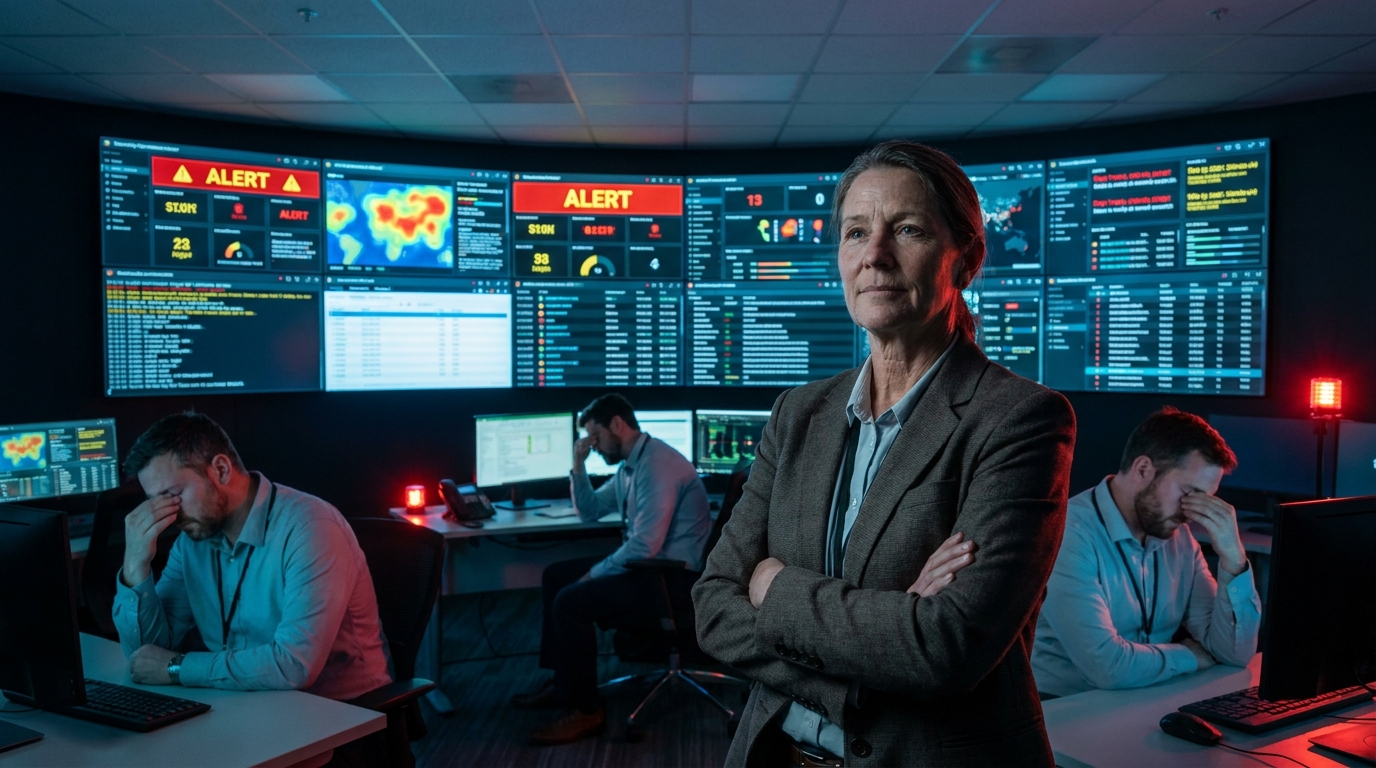
Alert Fatigue is a Leadership Failure, Not a Tech Problem
Alert fatigue isn’t a technology problem. It’s a leadership failure.
When security teams are buried under thousands of daily alerts, when analysts spend more time triaging noise than investigating threats, when the signal-to-noise ratio becomes so distorted that actual threats slip through undetected, that’s not a tool failure. That’s a decision failure.
The Real Cost of Alert Fatigue
Organizations often treat alert fatigue as something to solve through better filtering, smarter algorithms, or more sophisticated detection rules. They invest in SIEM tuning, threshold optimization, and alert suppression. These technical approaches address symptoms, not the disease.
The disease is leadership that has allowed the security program to operate in a state where human operators are cognitively overloaded. Leadership that has failed to ask: Why are we generating 10,000 alerts a day? Why are we asking analysts to make life-or-death security decisions while drowning in false positives?
The Decision Point
Alert fatigue emerges at a specific decision point: the moment leadership chose tool sprawl over integration, quantity over quality, and reactive detection over predictive intelligence.
-
Tool sprawl creates alert multiplication: Each security tool fires its own alerts in its own format on its own schedule. Seven tools = seven streams of noise. A unified platform with consolidated alerting is fundamentally a leadership choice about architecture, not a technical constraint.
-
Reactive detection generates noise: Signature-based detection fires on everything that looks like a known threat. Behavioral analytics trigger on statistical anomalies that often mean nothing. Machine learning models alert on patterns they’ve been trained to notice, not patterns that matter. A proactive, threat-informed detection strategy that focuses on what actually threatens your business generates fewer, higher-confidence alerts.
-
Tuning is exhausting because the foundation is broken: Organizations spend analyst hours tweaking thresholds and writing suppression rules because they’re trying to optimize broken architecture. Once the architecture is sound, tuning becomes maintenance, not a permanent firefighting operation.
The Leadership Question
When your security team is experiencing alert fatigue, the question isn’t “What tool do we need?” The question is: “What decisions did we make that led to this?”
And the follow-up: “Are we willing to make different decisions now?”
Because every organization facing alert fatigue has a choice:
- Continue managing symptoms through better tuning, more rules, and more alerting complexity.
- Architect the detection environment so alerts matter.
Option one is cheaper short-term. Option two is leadership.
Alert fatigue doesn’t get solved in the SIEM dashboard. It gets solved in the boardroom.
← All writing