

Proactive by Design: Architecting the AI-Native Platform for Cyber Resilience
The breach already happened. The question is when, for how long, and how severe. Prevention isn't 100%, so the design brief changes: anticipate, withstand, recover, adapt. Why the reactive model fails on architecture, and what an AI-native platform actually requires. This was presented during GovWare 2025, exclusive EBC session for the delegates.
By Chee Wan
The breach already happened. The question is no longer whether your organisation will be compromised, but when, for how long, and how severe the damage will be.
For decades, we’ve built digital fortresses. Higher walls. Deeper moats. More layers of defence. The model felt sound. The data says otherwise.
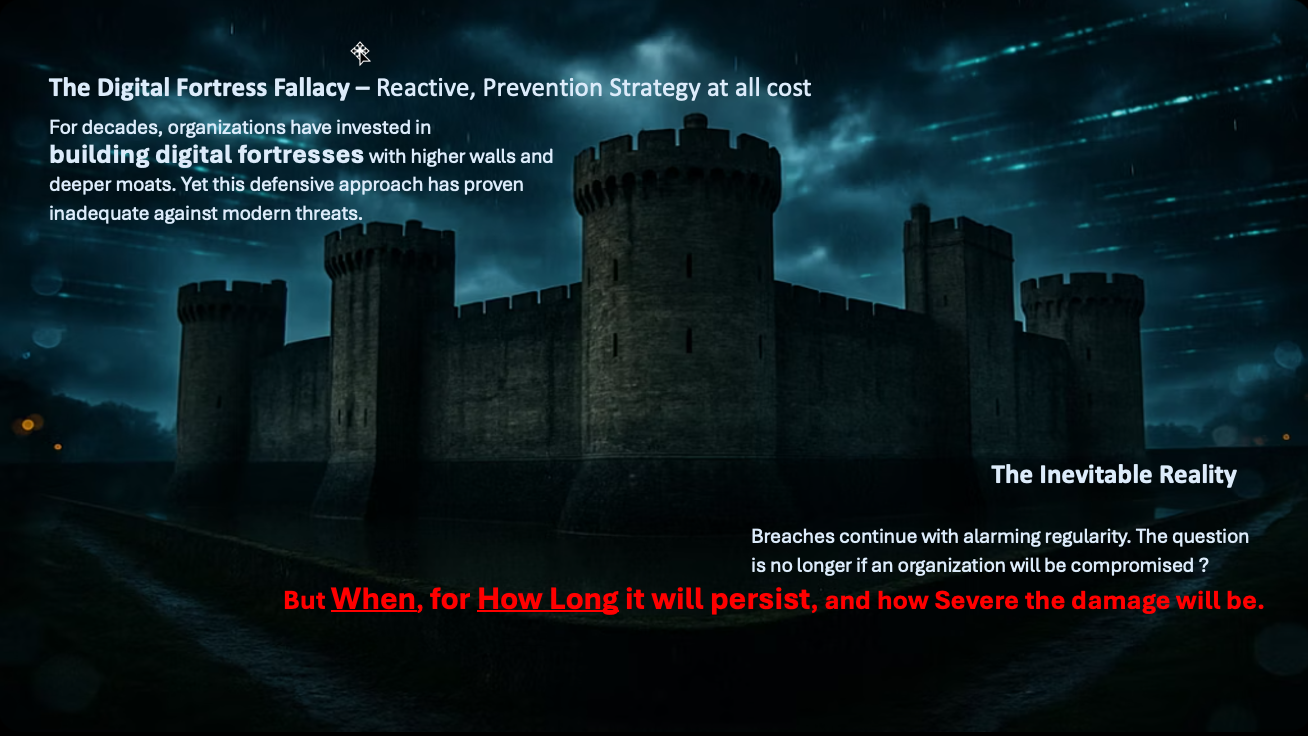
The prevention illusion
73% of organisations experienced a security incident last year. 63% traced at least one attack back to an unknown, unmanaged, or poorly managed internet-facing asset. And 68% of breaches involved a human element: error, credential misuse, or social engineering. We’ve invested heavily in controls. The attackers found the gaps between them.
The 2025 Verizon DBIR makes the scale uncomfortable to ignore: 22,052 security incidents, 12,195 confirmed breaches analysed. Ransomware present in 44% of all breaches, up from 32% the prior year. Third-party involvement doubled to 30%. Attacks on edge devices and VPNs up eightfold. And the number that stopped me: global median dwell time (the gap between initial compromise and detection) has increased for the first time in over a decade. Eleven days. We are getting slower, not faster.
The AI threat multiplier
The threat landscape has changed structurally, not incrementally. Organisations now face an average of 1,876 cyberattacks per week, up 75% from 2023. AI-generated phishing emails achieve a 54% success rate against targets. Human-written attacks land at 12%. That gap is not closing; it’s widening.
Threat sophistication has reached a different tier. Voice cloning attacks grew 442% in 2024. 75% of C-suite executives have been targeted by deepfake technology. Nation-state activity using AI increased 150%. And 79% of detections now come from attacks that leave no traditional malware signature at all: living-off-the-land techniques, legitimate credentials, trusted tooling. Your signature-based defences are checking for something that isn’t there.
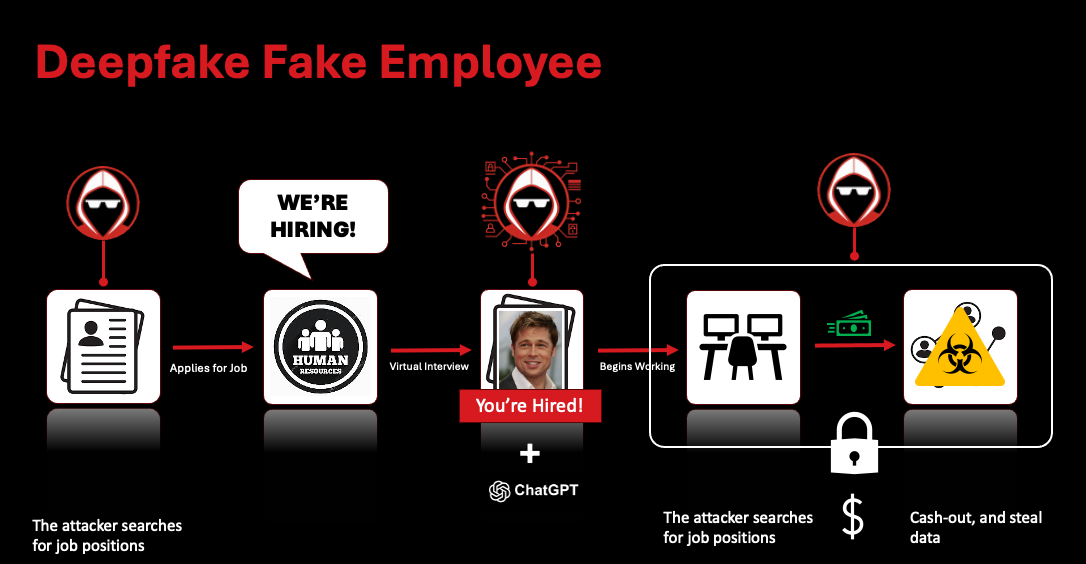
The deepfake fake-employee scenario illustrates how far this has come. An attacker identifies a job opening, applies with an AI-generated identity, passes a virtual interview using real-time face-swapping technology, gets hired, begins working, then cashes out and exfiltrates data before anyone notices the identity was synthetic. This isn’t theoretical. It’s operationally viable today with commodity tools, several of them free.
The imperative shift
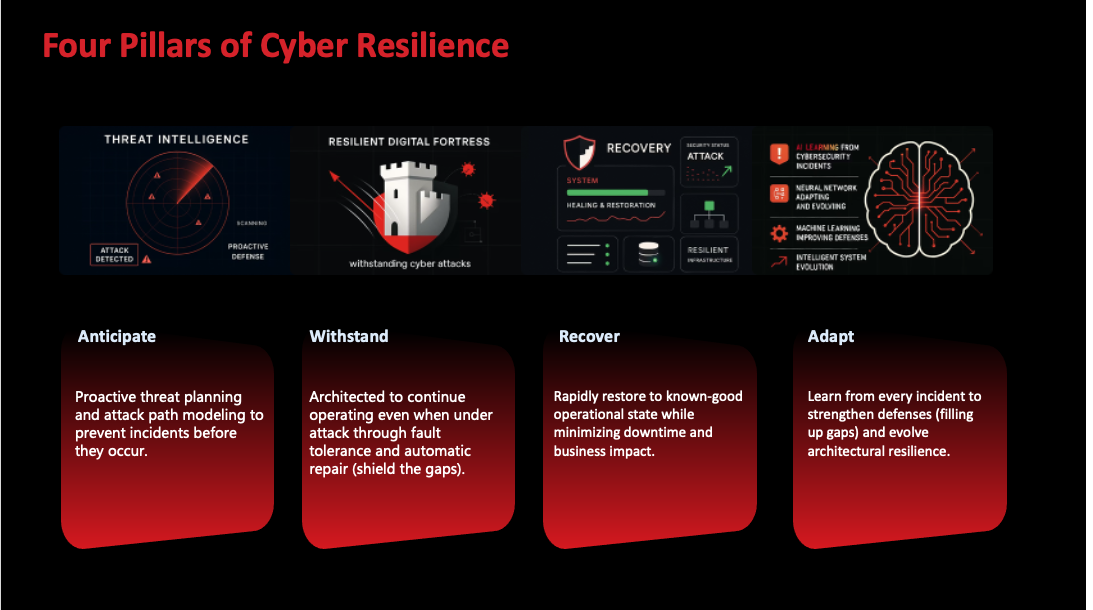
If prevention is not 100%, and it isn’t, then the strategic question changes. NIST defines cyber resilience as “the ability to anticipate, withstand, recover from, and adapt to adverse conditions, stresses, attacks, or compromises.” Not avoid. Not prevent. Anticipate, withstand, recover, and adapt.
That’s a fundamentally different design brief.
Why the reactive model fails
The failure isn’t effort or investment. It’s architecture. Three symptoms I see consistently across enterprise environments in the region.
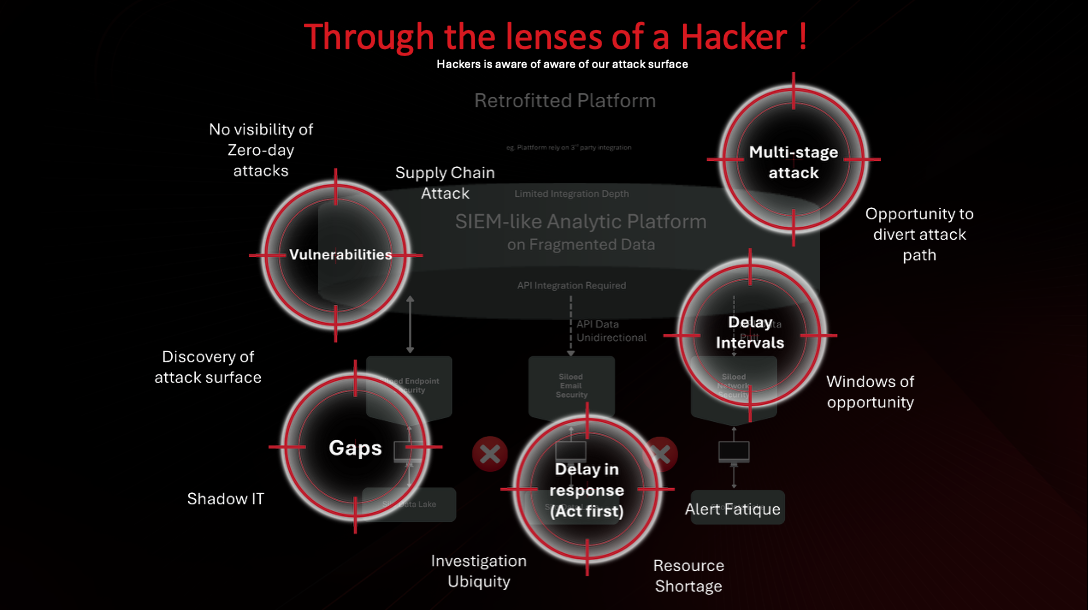
First: tool sprawl and data silos. Dozens of disparate security tools (EDR, CSPM, NDR, email security, identity), each functioning as an independent data silo. An attack that starts in a third-party API, moves to a cloud workload, then pivots laterally across the internal network generates a series of disconnected, low-confidence alerts in three different consoles. For an overwhelmed analyst, stitching those together manually is close to impossible.
Second: alert fatigue. SOC teams face between 3,832 and 11,000 alerts daily. 73% of security professionals admit to having missed, ignored, or failed to respond to high-priority alerts. 66% cannot keep pace with their queue. Junior analysts burn out and leave, 70% within three years of joining. That’s not a people problem. It’s what a broken architecture does to good people.
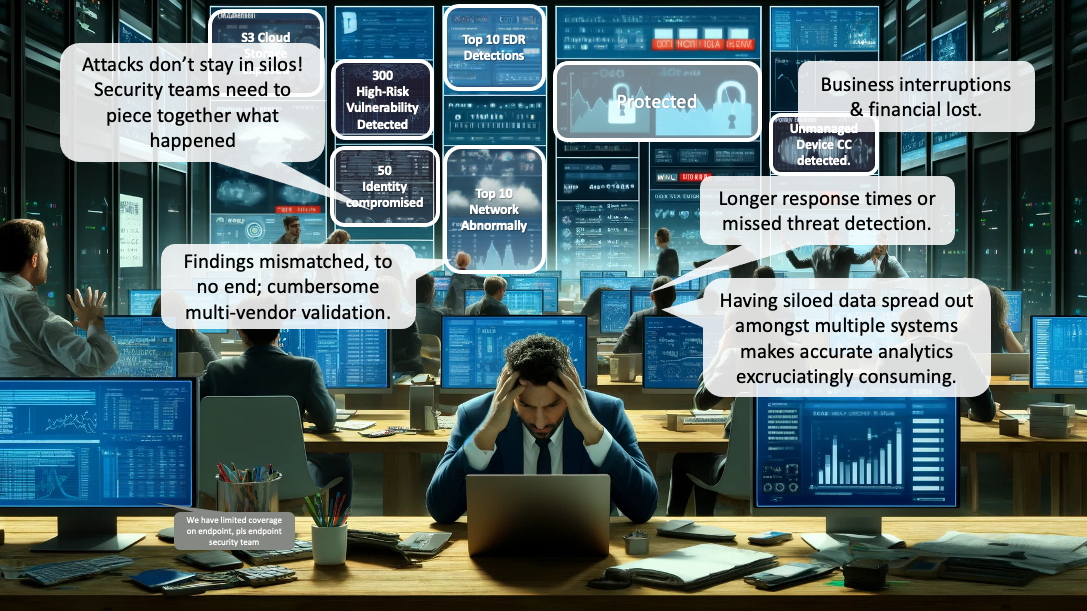
Third: the financial consequence. Breaches with a lifecycle exceeding 200 days cost an average of $5.46 million, $1.39 million more than breaches contained in under 20 days. Alert fatigue directly extends dwell time. Dwell time directly inflates cost. The architecture is writing cheques the business has to cash.
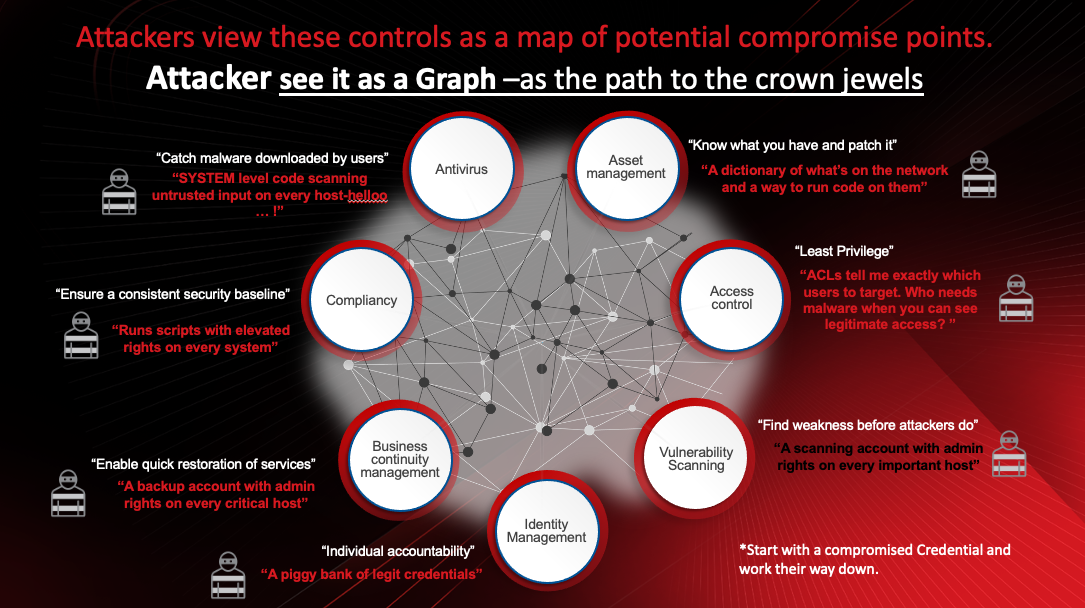
Here’s the dynamic that crystallises this most clearly for me. Defenders look at their security controls as a list: antivirus, access control, vulnerability scanning, identity management, compliance. Each control mapped to a problem it solves. Attackers look at the exact same controls as a graph, a map of pathways to the crown jewels. They start with a compromised credential and traverse the interconnected relationships between systems. The vulnerability scanner with admin rights on every host. The backup account with domain-wide access. The IAM role attached to the publicly exposed EC2 instance. Your access control lists literally tell them which users to target next.
The AI-native mandate
The path from reactive to resilient requires a genuine architectural re-platforming, not a new tool added to an existing stack.
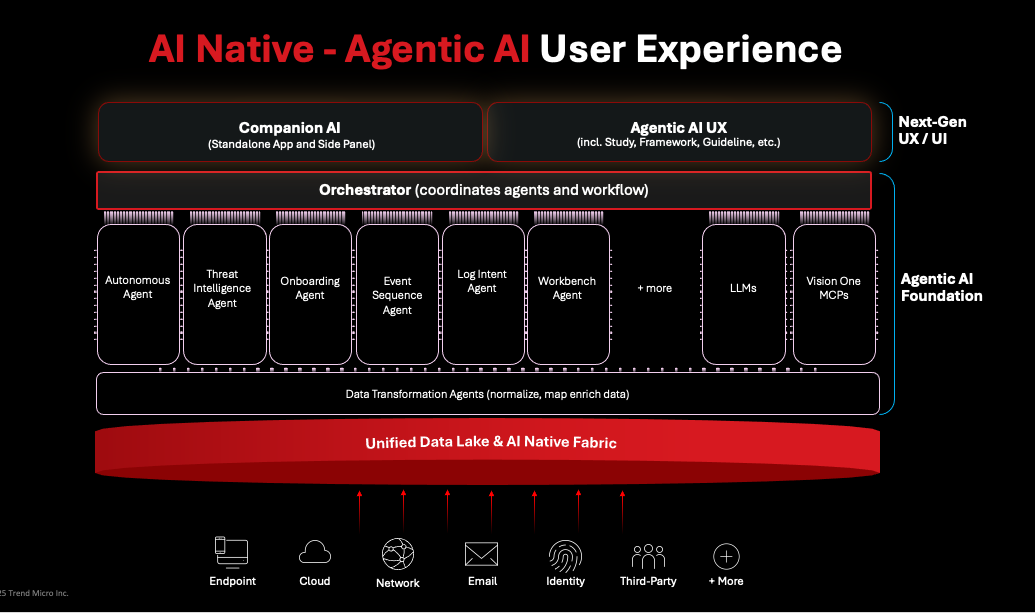
A true AI-native platform is one where AI is not a feature added to a legacy product, but an intrinsic, foundational component of the entire system. Think of it this way: there’s a meaningful difference between a legacy house retrofitted with a few smart plugs and a modern building where intelligence is woven into the electrical, HVAC, and security systems from the ground up. Both have “smart” features. Only one was built to use them.
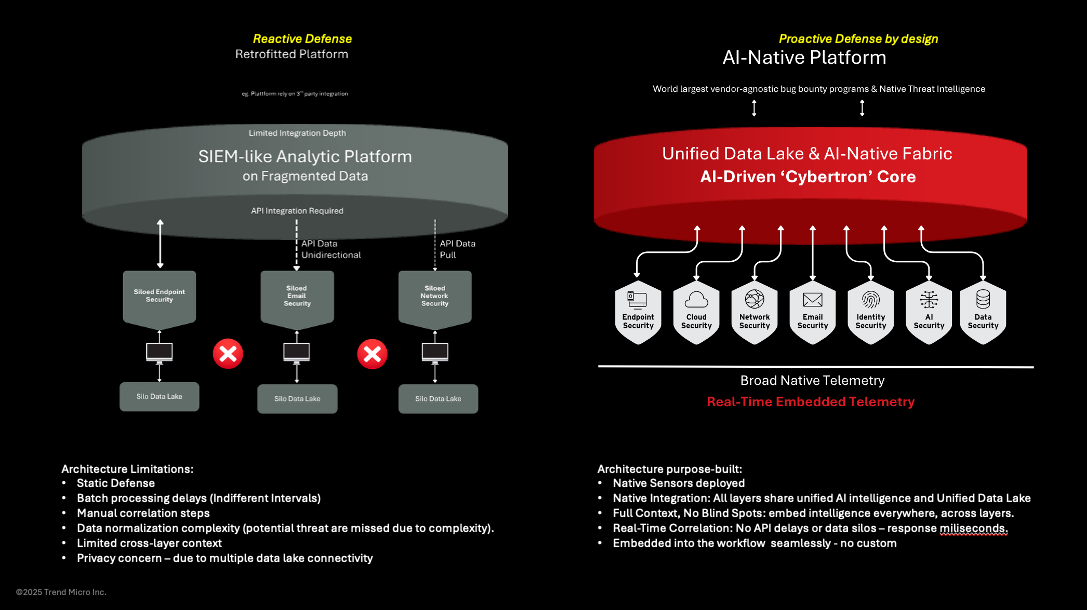
The architectural difference between a retrofitted platform and an AI-native platform comes down to data.
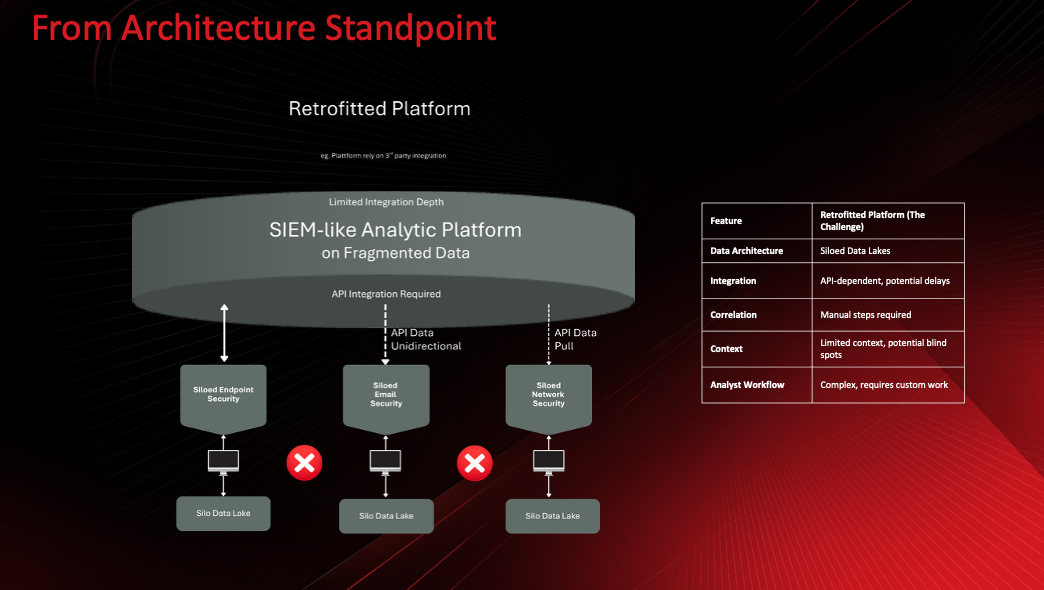
A retrofitted platform sits a SIEM-like analytics layer on top of fragmented, siloed data, dependent on API integrations, batch processing delays, and manual correlation steps.
An AI-native platform is built on a unified data lake fed by native sensors across every domain: endpoint, cloud, network, email, identity, and AI security. The telemetry is real-time. The context is preserved. The correlation happens in milliseconds, not hours.
Native sensors matter more than most evaluations acknowledge. Because they are purpose-built for the platform, they capture specific telemetry (process command-line arguments, parent-child process relationships, API call parameters) that generic third-party integrations either don’t provide or lose during normalisation. When every sensor speaks the same data language, correlating a suspicious email attachment to a malicious process execution to a C2 beacon is a single automated step. On a fragmented stack, it’s a multi-console investigation that takes an analyst 10+ minutes per alert, and there are thousands of alerts.
Activating resilience: the four pillars in practice
Anticipate. A unified data foundation powers Continuous Attack Surface Management, continuously discovering and monitoring all internet-facing assets, including shadow IT and forgotten subdomains that represent genuine blind spots. Combined with AI-driven threat modelling and attack path prediction, the platform answers the question that matters: not “which CVEs are present?” but “which CVEs are actively exploited in the wild and reachable on our critical assets, and what path would an attacker take from perimeter to crown jewels?”
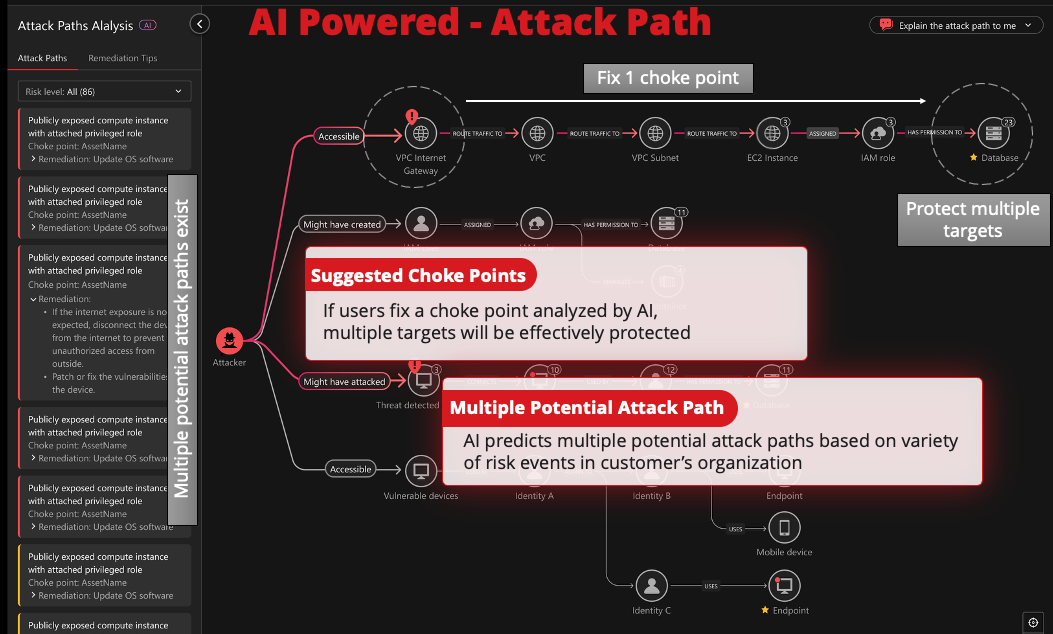
Withstand. Advanced ML algorithms applied to unified, high-fidelity data identify the subtle behavioural anomalies that evade signature-based tools: APTs, zero-day exploits, living-off-the-land techniques. More critically, AI automatically correlates related events from across endpoint, network, cloud, and identity into a single prioritised incident. Thousands of discrete alerts become a handful of actionable cases. IBM’s research shows organisations making extensive use of security AI reduce average breach costs by $2.22 million compared to those that don’t.
Recover. Native integration with SOAR capabilities enables automated response playbooks. On high-confidence detection of a compromised endpoint, the platform automatically isolates the device, revokes associated credentials across all systems, blocks the C2 domain at the firewall, and initiates restoration from a known-good backup. Machine-speed response minimises blast radius.
Adapt. Every incident, every threat hunt, every response action becomes training data. The system learns, refining detection algorithms, suggesting hardening policies, adjusting the defensive posture. It doesn’t recover to its previous state. It evolves to a stronger one.
What this looks like in the field
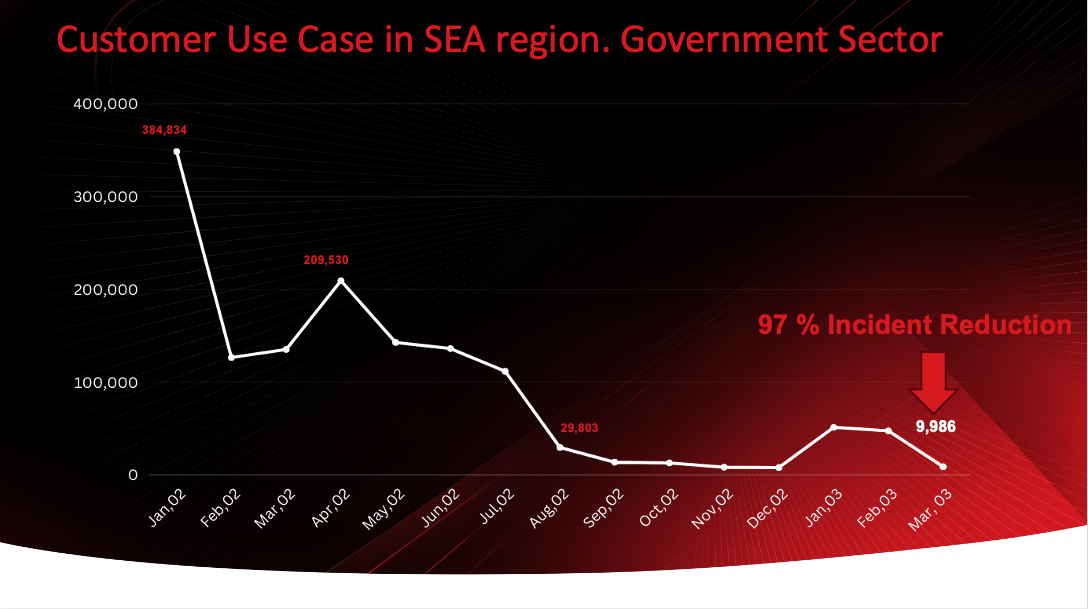
A government agency in Southeast Asia was running a fragmented security stack: multiple tools, disconnected data, analysts drowning in alerts. At peak, they were handling 384,834 incidents a month. After migrating to a unified AI-native platform with a centralised data lake and native sensors across endpoint, network, email, cloud, and identity, that number came down to 9,986. A 97% reduction in incident volume.
Same people. Same threat landscape. Different architecture. Different signal quality.
The three shifts every CISO needs to drive
The technology and the architectural blueprint exist. The challenge is strategic, not technical.
First, the strategic shift: the board conversation has to move from “how do we prevent all breaches?” to “how do we guarantee business continuity when one occurs?” Measure success on business uptime and quantifiable risk reduction, not the number of blocked threats.
Second, the architectural shift: resist the temptation to buy another standalone point solution. Consolidate around a true AI-native core. When evaluating platforms, lead with data architecture. Is there a unified data lake? What is the breadth of native sensor coverage? Those two questions will tell you more about AI efficacy than any feature comparison.
Third, the operational shift: transform the SOC from a reactive alert queue into a proactive threat hunting function. Measure analysts on attack paths identified and closed before exploitation, not tickets resolved.
The evaluation question I’d push every security leader to ask vendors isn’t “is your platform AI-powered?” It’s: “How is AI embedded in your core architecture, and how does your unified data lake enable you to move from detection to prediction?”
That’s the conversation that separates platforms that market resilience from platforms that actually deliver it.
Resilience is not a posture. It’s an architectural design choice.
For the people in the room
When you last went through a platform evaluation, did data architecture lead the conversation, or did it stay at the feature and integration level? And did that change the outcome?
← All writing